Glossary /
Fake Tracking Number
What is Fake Tracking Number?
E-commerce success is built on a foundation of speed and trust. To deliver the seamless shopping experience customers expect, retailers have significantly streamlined operations, particularly for processes like returns. Most systems are designed to issue a quick refund once a return tracking number shows activity, operating under the assumption of good faith. While this efficiency is essential for legitimate customers, it is precisely this trust and smooth operation that fraudsters exploit.
By manipulating the return process, scammers can use a fake tracking number to make it appear an order was returned or “lost” in transit—a scheme that results in them keeping the merchandise while receiving a full refund. This sophisticated fraud scheme is known as FTID, or Fake Tracking ID fraud.Understanding the Fake Tracking Number (FTID)
FTID fraud is a retail scheme where a fraudster successfully obtains a full refund for an item they never actually returned. The core of the scam revolves around the misuse of a legitimate-looking but fraudulent fake tracking number.
The Fake Tracking ID is rarely a randomly generated code. Instead, it is typically a real tracking number for a completely different package—often a low-value item, a shipment sent to a similar ZIP code, or a number from a package that has already been delivered and cleared the system. The key is that the fake tracking number will show valid shipping activity.
The scam works through a calculated series of steps:
The Return Initiation: The fraudster buys a high-value item and then initiates a return through the retailer's portal, securing a Return Merchandise Authorization (RMA) number.
The Submission of the FTID: Instead of shipping the actual item back, the fraudster submits their acquired fake tracking number to the retailer.
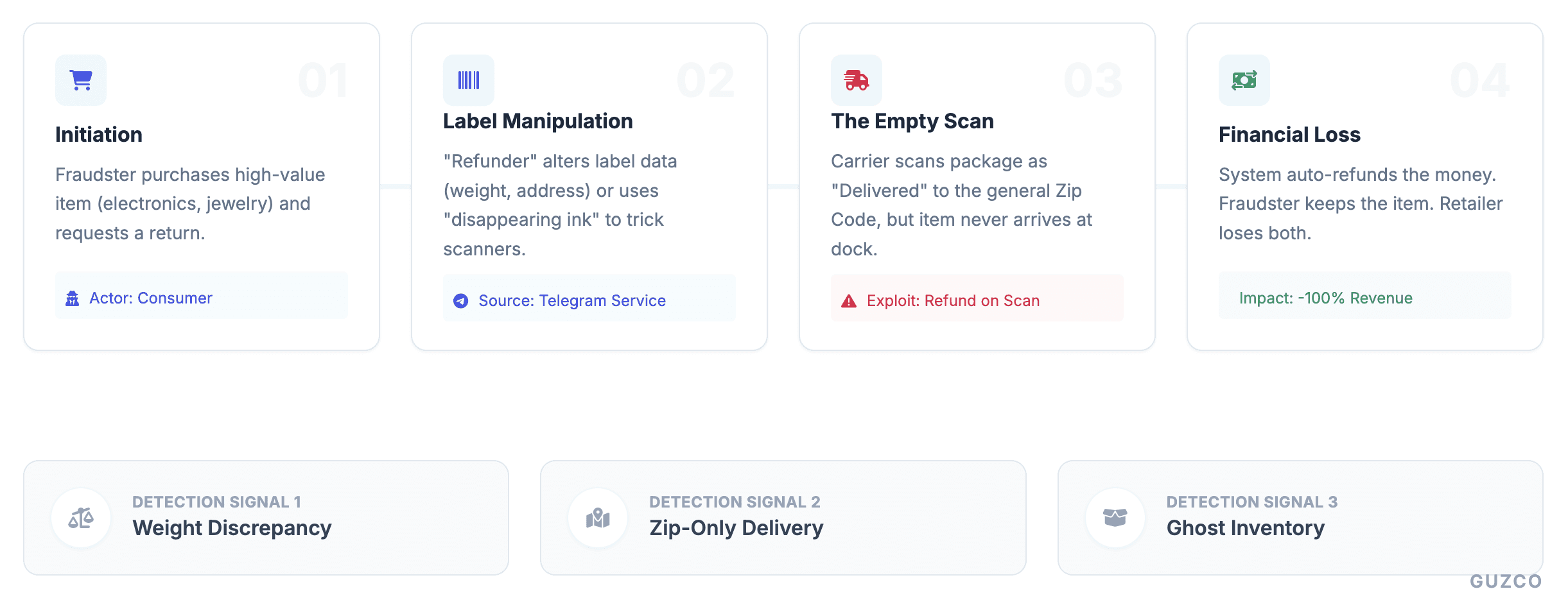
Advanced Methods of System Deception
The simplest FTID involves reusing an old number, but sophisticated fraudsters deploy advanced techniques to ensure the fake tracking number appears flawless and the ensuing investigation hits dead ends:
Fake Label Makers: Fraudsters often use specialized fake label makers to generate highly authentic-looking labels with real tracking number formats from specific carriers. This allows them to perfectly control the source and destination details associated with the fake tracking number.
The Delivery Point Plot: The fraudster controls the final scan point. This could involve using a fake tracking number that delivers to a nearby business, a residential address near the warehouse, or even having the package delivered to a location within the retailer's facility (like an internal mailroom) that is not the designated return bay, confusing receiving staff.
Disappearing Ink: In some schemes, labels are printed using inks or thermal processes designed to degrade quickly. The tracking label initially looks valid, but crucial address information may disappear after a day or two, making it virtually impossible for the retailer to trace the route of the fake tracking number during a later investigation.
The System Deception: The tracking information associated with this fake tracking number will quickly update, confirming a package was shipped from the fraudster’s area and—critically—was successfully delivered.
The Automatic Payout: Because the system sees a delivery scan against the fake tracking number, the retailer’s automated refund system processes the full reimbursement. The fraudster receives their money back and retains the original high-value merchandise.
The challenge for retailers is that the delivery confirmation associated with the fake tracking number meets the minimum automated requirement for a refund, often leaving no immediate red flags for operational teams.
Key Defenses Against the Fake Tracking Number Threat
Protecting your business requires moving beyond simply validating a delivery scan. The following measures are the most valuable tools at your disposal to detect and prevent sophisticated return fraud using a fake tracking number and safeguard your revenue:
Weight and Dimension Verification: This is the most effective technical defense. Implement a mandatory check that compares the expected weight and dimensions of the high-value item being returned against the actual recorded weight and dimensions associated with the fake tracking number. A high-end 10lb appliance should not have a tracking record showing a 6oz package delivery.
Address Geolocation Cross-Check: Never assume a delivery scan means success. Verify that the fake tracking number shows delivery to the exact street address of your designated return facility, not just the same city or a similar ZIP code. This counters the "delivery point plot" by forcing a precise match.
Implement a Manual Post-Receipt Inspection Hold: Move away from issuing instant refunds upon receiving an electronic delivery scan. Require a brief physical hold and inspection of the returned merchandise before the refund is processed. While this may add a small delay to the return process, it is a critical firewall against refunding non-existent returns, especially when the label may contain disappearing ink.
Leverage Advanced Anti-Fraud Tools: Integrate solutions that can enrich tracking data and flag suspicious user behavior. This includes identifying patterns like a high volume of initiated returns, frequent changes in user details, or the use of known high-risk IP addresses and disposable email services often favored by fraud rings who deploy fake tracking numbers.
By implementing these layered security protocols, you stop relying solely on a tracking number's status and start analyzing the full context of the return, allowing you to significantly reduce your exposure to this costly and complex form of e-commerce fraud.