Glossary /
Wardrobing
Wardrobing is a form of return fraud where a consumer purchases an item (typically apparel or electronics), uses it for a specific purpose or event, and then returns it for a full refund. This practice, often driven by social media culture and economic pressure, cost retailers an estimated $103 billion in 2024, representing a significant strain on inventory management and profitability.
What is Wardrobing?
Wardrobing—often euphemistically called "free renting"—is the act of buying merchandise with the premeditated intent to use it temporarily and return it at no cost. Unlike legitimate returns caused by sizing issues or defects, a wardrobed item is returned in a "used" condition, though often carefully repackaged to appear new.
While most commonly associated with high-end fashion (e.g., wearing a dress to a wedding and returning it the next day), it also extends to:
Electronics: Buying a large TV for the Super Bowl and returning it immediately after.
Tools: Purchasing expensive equipment for a single weekend project.
Accessories: Using luxury handbags or jewelry for a photoshoot or social media post.
Understanding Wardrobing
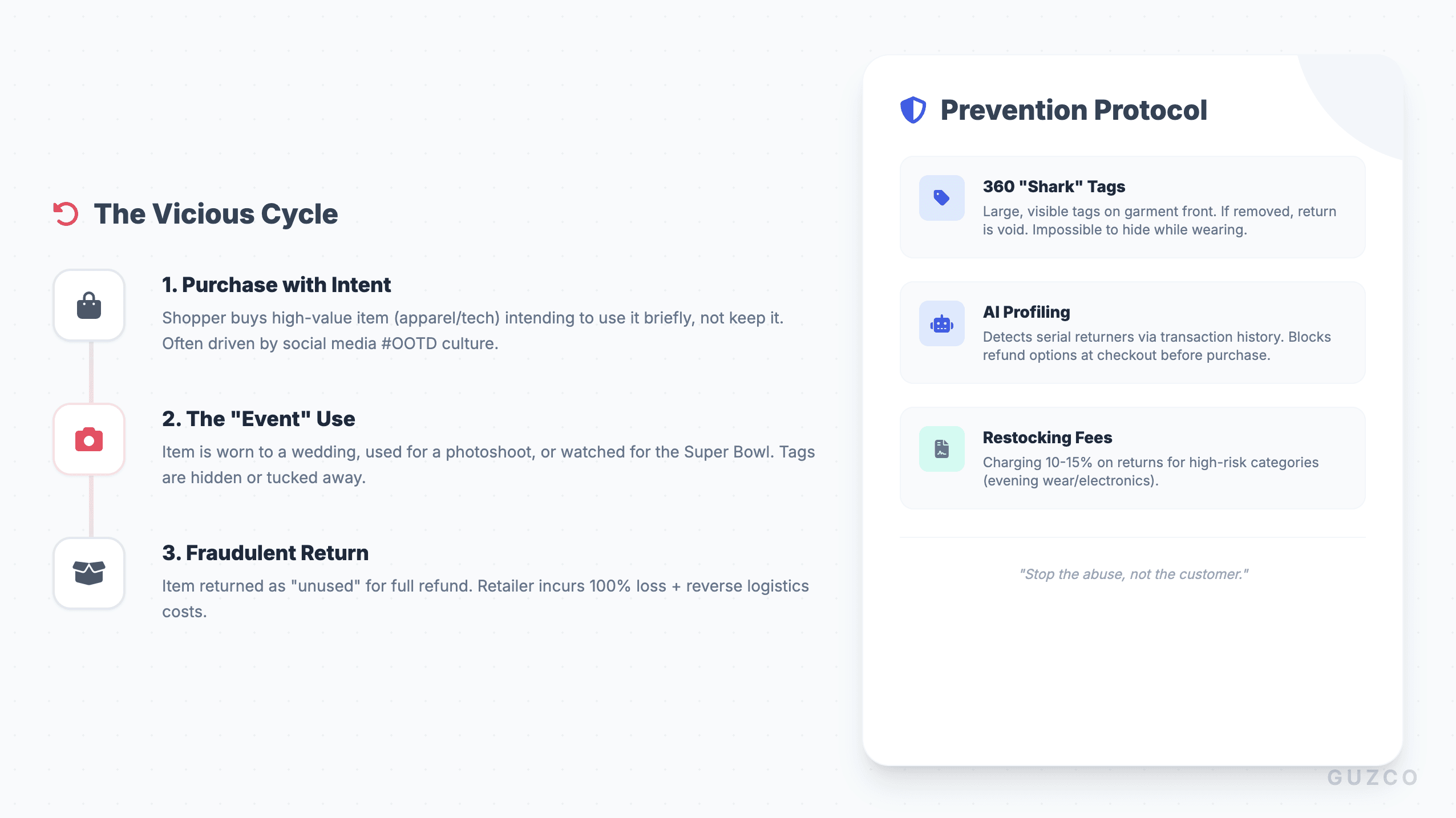
To combat wardrobing, retailers must understand the psychology and mechanics behind it. It is distinct from Bracketing (buying multiple sizes to find the right fit), as the intent in wardrobing is never to keep the item.
The "Snap-and-Send" Phenomenon
The rise of the "Outfit of the Day" (#OOTD) culture on Instagram and TikTok has normalized wardrobing among younger demographics. A 2024 study suggests that nearly 51% of Gen Z consumers admit to engaging in some form of return abuse, driven by the desire to post new looks without the financial commitment of ownership.
Why It Works
Wardrobing exploits the "gray area" of return policies. Retailers, fearing negative reviews or viral backlash, often prioritize lenient "customer-obsessed" return windows (e.g., 30–90 days). Fraudsters leverage this leniency, knowing that associates at busy return counters rarely have the time to perform forensic-level inspections on every garment.
Impact & Detection (2024-2025 Data)
The financial impact of wardrobing has shifted from a nuisance to a critical profit drain.
Key Statistics
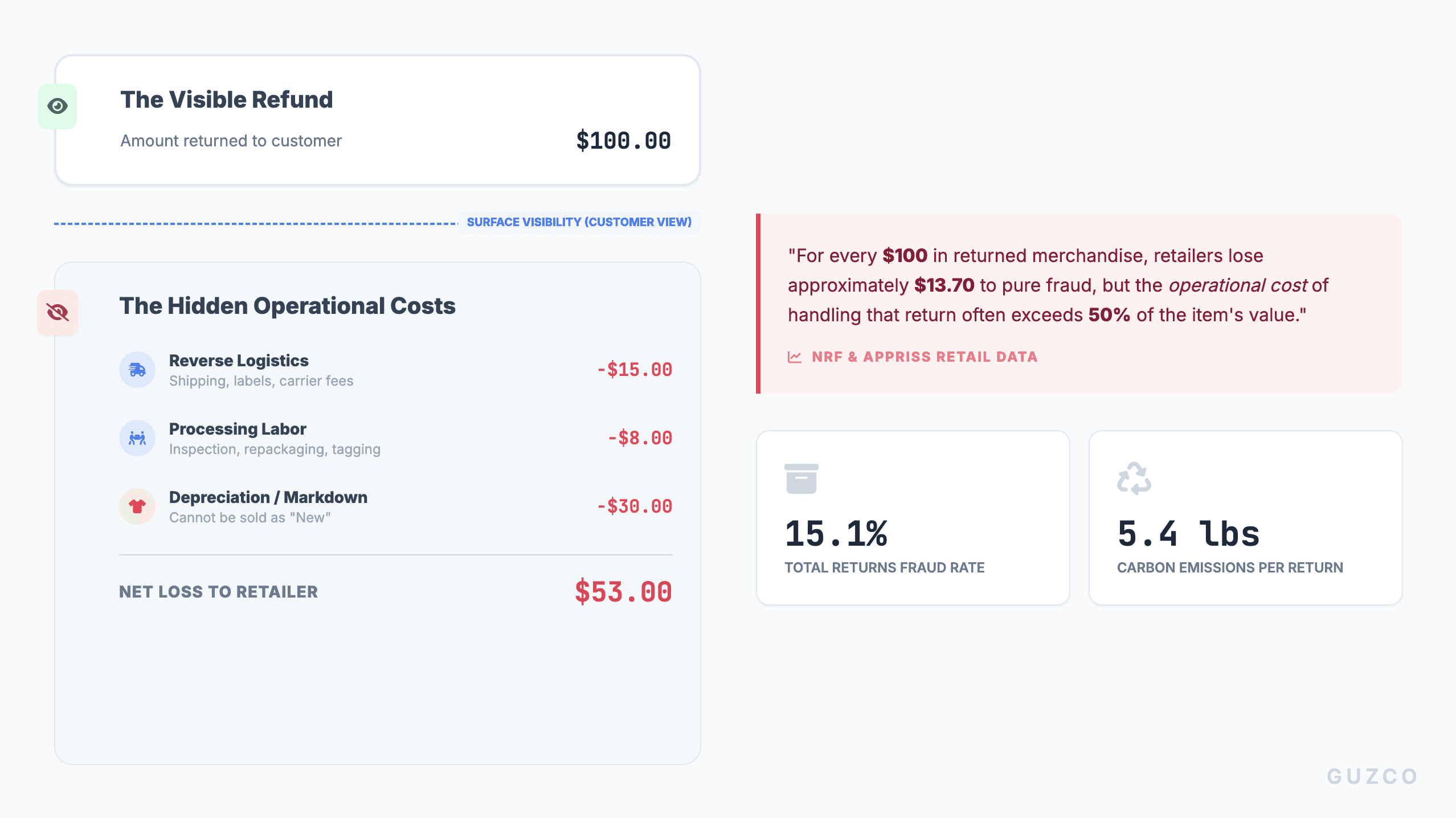
Financial Loss: According to a 2024 report by Appriss Retail and Deloitte, retailers lost approximately $103 billion to return fraud, with wardrobing being a primary contributor.
Fraud Rate: Fraudulent returns accounted for 15.14% of all retail returns in 2024.
Resale Value: Wardrobed items often cannot be resold as new. They must be marked down (losing 20–50% value), sold to liquidators, or destroyed, compounding the loss beyond the initial refund.
Signs of Wardrobing
Retailers can detect potential cases by looking for specific red flags:
"Review" Signs: Smells of perfume, laundry detergent, or smoke on "new" clothing.
Timing Patterns: Returns made on Mondays (post-weekend events) or immediately after major holidays (e.g., post-Halloween costumes).
Serial Behavior: Accounts that show a high frequency of returns across different product categories, often with a near-100% return rate.
Missing Hygiene Seals: Disrupted seals on swimwear, electronics, or accessories.
Prevention & Solutions
Mitigating wardrobing requires a "friction-right" approach—adding hurdles for fraudsters without punishing loyal customers.
1. Physical Deterrents
360 Security Tags: Large, highly visible plastic tags (e.g., "Shark Tags") attached to the front of a garment. The item can be tried on at home, but the tag is impossible to hide if worn publicly. Once the tag is removed, the item is non-returnable.
Void Seals: For electronics, using tamper-evident tape that reveals a "VOID" message if the box has been opened.
2. Policy Optimization
Restocking Fees: Implementing a 10–15% restocking fee on high-risk categories (like evening wear or electronics) discourages "renting."
Store Credit Only: Offering store credit rather than cash refunds for returns made without a receipt or after a certain short window (e.g., 7 days).
Blacklisting: Updating Terms of Service to explicitly state that the retailer reserves the right to refuse service to customers with abnormal return patterns.
3. Technological Solutions
AI Profiling: Using fraud detection platforms (e.g., Signifyd, Forter) to analyze transaction history. These tools can flag a transaction before it is approved if the user has a history of return abuse.
Return Authorization (RMA) Logic: Dynamic return portals that automatically reject return requests for specific high-risk SKUs if the return reason ("No longer needed") matches a known fraud profile.
Wardrobing is no longer a harmless consumer hack; it is a systematic drain on retail profitability. As we move through 2025, successful retailers will be those who transition from "no-questions-asked" return policies to data-driven, behavior-based return authorization models. The goal is not to stop returns, but to stop the abuse of the return privilege.
Affiliate Fraud: Types, Detection, and Prevention